
Indigenous Experiences in Manitoba: 7 Remarkable Places To Visit

Looking for Indigenous experiences in Manitoba, Canada? On this trip, I made bannock cooked over an open fire in Riding Mountain National Park, then headed to Winnipeg, the birthplace of the Métis Nation and home to Canada’s largest urban Indigenous population. I also saw the world’s largest public collection of Inuit art at Qaumajuq. Manitoba is the ancestral homeland of the Métis Nation and other Indigenous peoples of present-day Canada, and you can experience its stories, art, and traditions firsthand. Here are my favorite places to start.
Continue reading or listen to the podcast episode below.
Listen on Apple Podcasts | Spotify | Amazon Music | Any player
Thank you to Travel Manitoba and Tourism Winnipeg for partnering with me on this episode.
This is Part II of a two-part series exploring Indigenous travel attractions, history, and culture across the Canadian provinces of Saskatchewan and Manitoba. Click here to read Part I: Indigenous Attractions in Saskatchewan.
What is Indigenous Travel?
Indigenous travel focuses on visiting and experiencing Indigenous peoples’ cultures and traditions. Indigenous tourism supports Indigenous communities and fosters the exchange of perspectives, ideas, hidden histories, and traditional wisdom.
Canada offers a range of experiences, from cultural immersion to breathtaking natural landscapes. Some examples of Indigenous tourism include Pow Wows, Indigenous art, guided tours, traditional crafts, cooking classes, wildlife viewing, hiking, fishing, and more.
Popular Indigenous tourism destinations in Canada include Manitoba, Saskatchewan, Northwest Territories, and British Columbia.
Why Indigenous Tourism in Manitoba Matters
Indigenous travel can help preserve and promote Indigenous cultures. It also provides economic opportunities for Indigenous communities to generate the income needed to reinvest in education, health, and infrastructure.
For travelers, Indigenous travel fosters cultural exchange and understanding. Learning about different worldviews promotes empathy. Indigenous travel can be a powerful tool for social justice, raising awareness of the issues Indigenous peoples face and supporting cultural revitalization.
Today, more travelers want to positively impact local communities and the environment while immersing themselves in Indigenous cultures.
Things To Do in Riding Mountain National Park


Riding Mountain National Park offers a unique blend of natural beauty and rich Indigenous heritage. Beyond its stunning landscapes, abundant wildlife, and many outdoor activities, this park deeply connects to the Indigenous peoples who have called this land home for centuries.
1. Turtle Village
Immerse yourself in the region’s rich Indigenous culture at Turtle Village in Riding Mountain National Park, the first Indigenous-owned and operated all-year-round glamping accommodation within Treaty 2 Territory, the traditional territory of the Seven Nations Anishinaabe of Riding Mountain.
Turtle Village is leading the way in introducing Indigenous-led tourism back to Riding Mountain National Park. The park was created in the 1930s by pushing the Anishinaabe off the land.
Opening its doors in August 2023 in the heart of Wasagaming Campground, the property offers peace and tranquility in one of its eight “turtle shells.” Promoting a balanced life and spending time outdoors, Turtle Village’s eight off-grid shells are compact and sleep two people in a queen-size bed.


Bedding isn’t provided, so bring your own sheets, pillows, blankets, and anything else you may require for camping, like toiletries and cooking supplies. You can, however, charge your phone and laptop.
Powered by solar panels, backed by batteries, and heated with propane, Turtle Village’s sustainable accommodations were built with a strong commitment to minimal environmental impact.
During my visit, I had the privilege of sitting down with Ashley Smith, the passionate owner and operator of Turtle Village and Clear Lake Ice Fishing Village, who shared her connection to Riding Mountain National Park. Ashley hopes Turtle Village shows how we can enjoy high-quality, affordable housing that leaves no footprint on our land and requires little maintenance.
During the winter months, enjoy the Ice Fishing Village on Clear Lake. Through a guided ice fishing experience, connect with nature and embrace pre-contact fishing culture, techniques, and traditions. Blending the old with the new, you’ll also learn innovative fishing practices.
2. Our Bannock-Making Experience
Bannock making is an important Indigenous tradition in Canada. It connects us with our ancestors, honors tradition, and strengthens community bonds. Families often pass down bannock–making from elders to younger generations, allowing elders to share their knowledge, stories, and cultural wisdom.
At Turtle Village, Ashley Smith offers guests add-on cultural Indigenous experiences, such as making Bannock over an open fire and booking a glamping experience. She walked me through Clearwater Lake’s pre-contact history in the 1700s and the history of the Tanner bloodline.
What is Bannock?
Bannock is a type of flatbread that originated in Scotland. It’s an Indigenous staple food, often served at gatherings, ceremonies, and celebrations. Bannock is typically made with flour, baking powder, salt, water, fat, or lard. People often bake or fry it, using butter or oil. You can also serve it as dessert, with stew, or as a side.
Why is Bannock culturally significant?
Scottish settlers first introduced bannock to Indigenous peoples. During colonization, when Indigenous people were forcibly removed from their traditional land, Bannock was made using spoiled European ingredients.
Despite the painful history associated with the introduction of bannock, Indigenous people have transformed it into a symbol of their resilience and cultural survival. They have adapted the recipe to incorporate traditional ingredients and cooking methods, expressing their identity in unique ways.
At Turtle Village, we set the picnic table with plates and bowls, Bannock by Bangin’ Bannock (an Indigenous woman-owned business), water, prairie berries, and honey.
For my first time cooking on rocks, I was surprised by how easy Bannock was to make. Within ten minutes, it started to brown and was ready to eat. A little sweeter than expected, it was absolutely delicious with honey drizzled on top, reminding me of French Toast. Saskatoon berries or raspberries were other available topping options.
Have you ever had Bannock? What about cooking on rocks? Would you give it a try?
Best Indigenous Experiences in Winnipeg
From Riding Mountain National Park, it took about three hours to reach Winnipeg, Manitoba’s provincial capital and largest city. Making up 12% of the population, Winnipeg has the largest Indigenous population in an urban setting in Canada.

Winnipeg is the birthplace of the Métis nation, with Indigenous people of Canada having mixed First Nations and European ancestry. Here are my favorite Indigenous experiences in Winnipeg.
1. Canadian Museum For Human Rights

In Winnipeg, you’ll find our next stop: the Canadian Museum for Human Rights, the first museum dedicated to the evolution and future of human rights worldwide (not just in Canada).
The museum stands at The Forks, a meeting place for thousands of years. Before construction, archaeologists uncovered 400,000 artifacts here.
Near the entrance, you’ll see a well-preserved Moccasin footprint from 750 years ago. This discovery underscores Indigenous people’s presence and connection to the land for thousands of years, long before European settlers arrived.
The building itself is an architectural wonder. As you explore the galleries, LED-lit Alabaster ramps crisscross upward, symbolizing a path from darkness to light. It culminates at a viewing platform with panoramic views of the city.
With various permanent exhibits and traveling galleries, “Indigenous Perspectives” and “Canadian Journeys” stood out to me.


What are human rights?
At the museum, you’ll learn that human rights are an idea thousands of years in the making. They refer to the rights and freedoms we have simply because we are human.
Take a break from reading. Listen to this podcast episode on Apple Podcasts.
Meaningful Exhibits
At ‘Indigenous Perspectives,’ learn how First Nations, Métis, and Inuit people believe everyone and everything are interrelated, so human rights extend beyond rules and laws.
Canadian Journeys shares twelve Canadian human rights stories, like The REDress Project, by Jaime Black, a Métis visual artist.
Indigenous women and children are 3x more likely to experience violence than other women in Canada. Many murders remain unsolved and tend to receive little mainstream attention.
Winnipeg, in particular, has the largest number of missing Indigenous women and children in the country. Cases aren’t usually taken seriously, and people demand urgency and systemic change.

Bringing awareness to this critical national issue, the art installation by Jaime Black displays hanging red dresses that serve as a reminder of the thousands of missing and murdered Indigenous women and girls who are no longer with us. The exhibit highlights that Indigenous women and girls have the right to safety and justice.
Another exhibit highlighted the impact of residential schools, which destroyed families and the Indigenous way of life.
From 1871 to 1996, reportedly 150,000 Indigenous children were separated from their families and placed in government- and religious-sponsored residential schools far away from home. Here, generations of children suffered from neglect, abuse, or death.
At residential schools, children’s hair was forcibly cut short. They banned Indigenous clothing, languages, rituals, and food. Siblings were separated, further destroying family relationships.
This system of cultural destruction led to the loss of connection to their Indigenous language and culture and resulted in poor parenting, substance abuse, poverty, incarceration, homelessness, and domestic violence. The abuses of residential schools are still felt today.
However, all is not lost. Indigenous peoples across Canada are reclaiming their history and restoring their connection to their ancestral cultures.
Traditional practices have re-emerged, along with spiritual and other healing practices such as smudging, sweat lodges, sacred pipes, fasting, and ceremonies, all of which contribute to the ongoing healing process.
At the Canadian Human Rights Museum, you will be confronted with many human rights issues, some from Canada and others from around the world, that spark meaningful conversations.
While we’ve come a long way, our work is far from over. The fight for human rights is ongoing.
Continue reading or listen to this podcast episode on Spotify.
2. The Leaf

Located in Assiniboine Park, The Leaf explores four biomes from around the world. It showcases Manitoba’s natural diversity and how plants shape its cultural fabric. Through storytelling, it explores the connection between people and plants.
Having Caribbean roots, I immediately connected to the humid tropical biome, which housed many of the plants I grew up with, such as sugar cane, plantains, coffee, and corn.


Canada’s largest indoor waterfall in the tropical biome cascades about 60 feet and is a stunning sight. It reminds me of the majestic waterfalls in Iceland. The waterfall empties into a fish pond where you’ll see large koi.
Next, go to the dry Mediterranean biome, where the smell of herbs and pines greets you.
Take the elevator to the canopy walk for another view of the waterfall.
Marvel at the Leaf’s architecture and spend time at the butterfly garden.
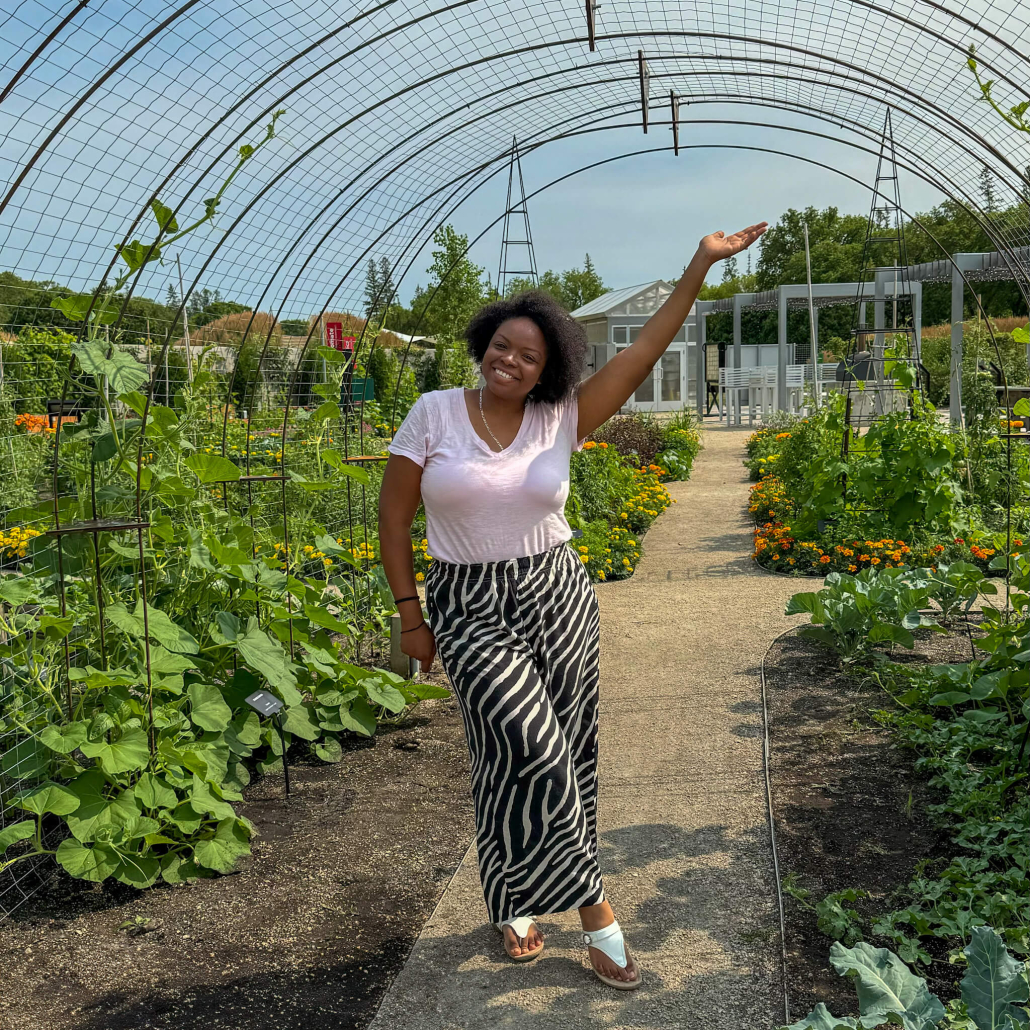
Head outside to explore the Indigenous Peoples Garden, which celebrates Indigenous peoples’ deep connection to the land. Learn how plants have been used for healing for millennia and offer natural remedies.
Sage, for example, is used for its cleansing and purifying properties, both physically and spiritually. Smudging ceremonies often burn it to clear negative energy, create a sacred atmosphere, and clear mental fog, confusion, and distractions.
As you roam the Kitchen Garden, you’ll see fruits, vegetables, and herbs such as green apples, cilantro, coriander, tomatoes, dill, sweet grass, and cedar. The on-site restaurant, Gather Craft Kitchen & Bar, features seasonal ingredients from the garden.
3. Winnipeg Art Gallery – Qaumajuq
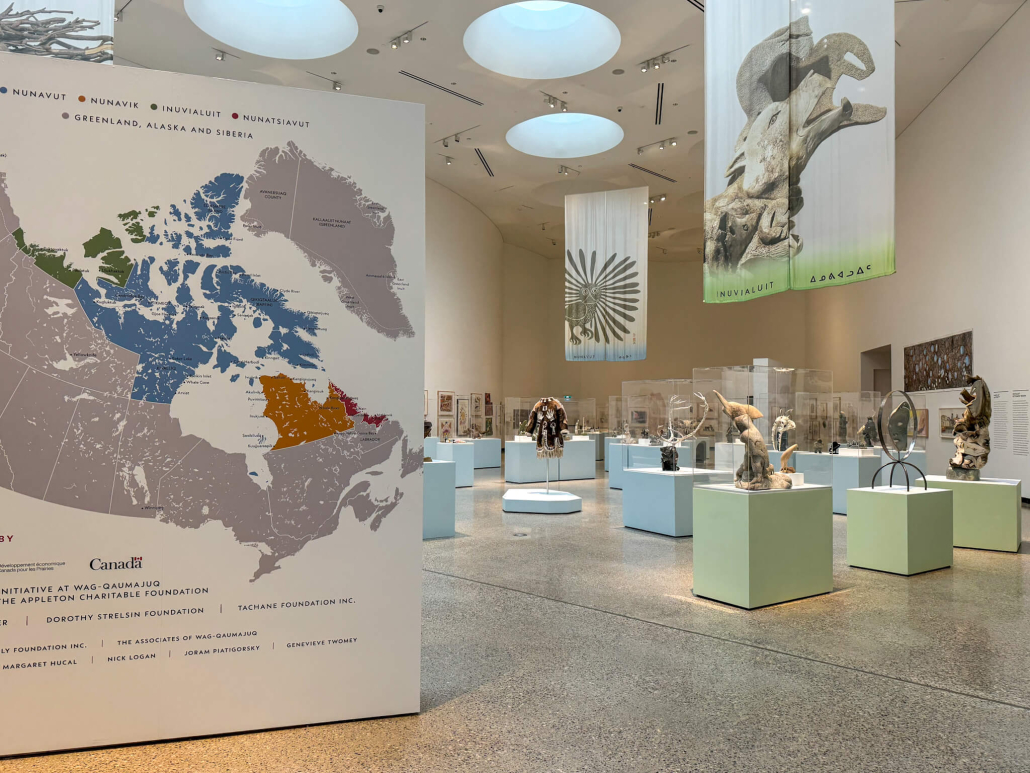
In downtown Winnipeg, art enthusiasts can visit the Winnipeg Art Gallery – Qaumajuq, home to the world’s largest public collection of Inuit art.
Through the glass doors and into the lobby, you’ll first see the three-story ‘Visible Vault,’ which houses nearly 5,000 Inuit stone carvings.
Interestingly, the name ‘Qaumajuq’ means “it is bright, it is lit” in Inuktitut, which accurately describes the natural light that fills the space.
Notice how the silkstone carvings are organized by community and color. Spot common recurring themes, such as scenes of daily life, animals, and living on the land.
No longer hidden from view or in storage, the Visible Vault makes the artwork accessible to the public, artists, their families, and communities.
Continue to the ‘Art by Inuit’ exhibition, which displays 400 pieces of Inuit art from Siberia, Alaska, Canada, and Greenland.


For fascinating finds, see a small pair of ancient goggles that helped prevent sun blindness, dating to about 200 BCE, or a 2,000-year-old figural needle case. Worn around the neck, they were fashionable and essential for storing needles to sew or repair clothing. Both these items offer a glimpse into how the Inuit lived long ago.
The museum also has an extensive collection of contemporary artwork. Beyond stone carvings, you’ll find a variety of media, including ivory, whalebone, printmaking, wall hangings, photography, clothing, and more.

I kept returning to pieces that celebrate motherhood, showcasing the strong bond between mother and child.
As one of Manitoba’s top attractions, the Winnipeg Art Gallery gave me a glimpse into Inuit values, beliefs, and ways of life, past and present.
4. Feast Café Bistro
Food is integral to Indigenous culture. For rich culinary experiences that showcase Indigenous peoples’ food knowledge, enjoy Indigenous cuisine at one of Winnipeg’s Indigenous-owned restaurants, such as Feast Café Bistro in the West End.
This restaurant features modern dishes rooted in traditional First Nations ancestral foods. Try bannock pizza, bison burgers, pickerel, and butternut squash fettuccine.
Other Indigenous-owned restaurants in Winnipeg include:
- Promenade Brasserie
- Sharecuterie
- Shelly’s Indigenous Bistro
- The Indigenous Kitchen – Food Truck
5. Historical Walking Tour with Elders
Winnipeg is located at The Forks, a historic meeting place for Indigenous peoples where the Red and Assiniboine Rivers meet. Historically, it served as an important trading post.
In the summer months, take an oral history walking tour led by Indigenous elders to learn about the stories and legends of this area.
Final Thoughts
Manitoba is known for adventure and reflection, two words that describe my experience exploring Canada’s heart.
Manitoba is a cultural epicenter home to 6,000 years of Indigenous history. Whether you visit a museum or historic site or attend a Pow Wow or film festival, Manitoba offers enriching, culturally immersive opportunities to understand Indigenous traditions and worldviews and connect with the local community.
Supporting Indigenous-owned and operated businesses is one way to contribute to Canada’s ongoing cultural preservation efforts. Indigenous chefs, artists, elders, and knowledge keepers are sharing their stories and invite visitors to join them. I encourage you to accept their invitation. Make memories. Visit Manitoba!
Have you visited Manitoba or Winnipeg? If so, what are your favorite things to do? What cultural experiences are you adding to your wish list? Share your thoughts in the comments below.
Looking for even more things to do in Winnipeg, Canada? Check out this video by Christopher Rudder for fun things to do and places to eat in town.
Continue road tripping across Canada. Discover Indigenous attractions and Indigenous experiences in Saskatchewan.
Listen on Apple Podcasts | Spotify | Amazon Music | Any player
Planning more Canada travel?
- Indigenous attractions in Saskatchewan: Wanuskewin, Batoche, and Remai Modern (Part I)
- How to plan a trip to Newfoundland: What to book first and mistakes to avoid
- Best day trips from Toronto (less than 2 hours away)

Danielle Desir Corbett is an award-winning and 6x grant-funded travel writer and podcast host who went from financial struggle to visiting 27+ countries all without waiting until retirement. Her story is proof that budget doesn’t limit adventure. Tune into The Thought Card Podcast for practical strategies to travel smarter and live on your terms. Say hello: thethoughtcard (at) gmail (dot) com.


Leave a Reply
Want to join the discussion?Feel free to contribute!